America has minted its last penny
It’s the end of a long tradition. The United States has made its last penny.
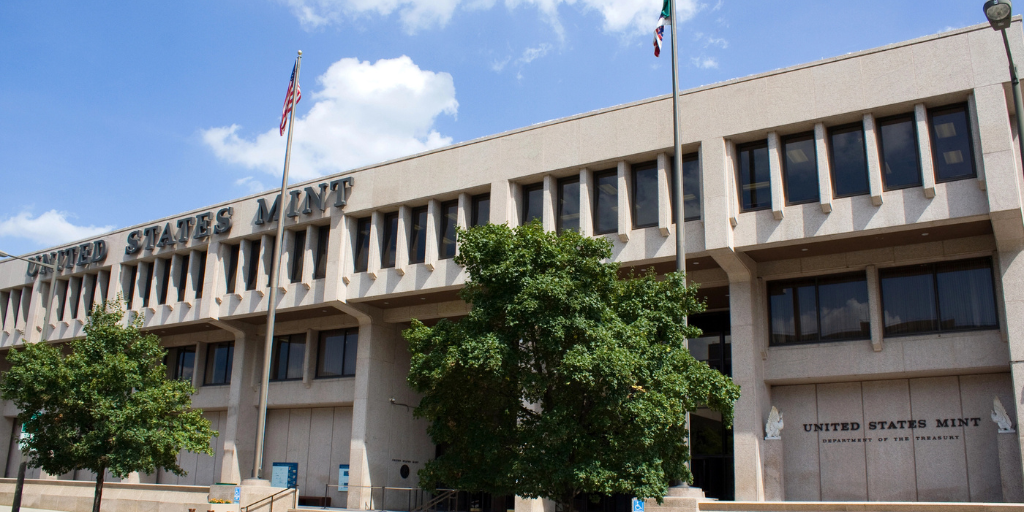
The United States Mint is the government agency responsible for making the country’s currency: printing the bills and striking the coins. And at a ceremony on November 12, 2025, the Mint’s production facility in Philadelphia struck its last penny. It came 232 years after the first penny was produced, also at the Philadelphia Mint.
The decision had been a long time coming. For decades, economists pointed out that the penny had outlived its usefulness. America’s one-cent coin cost more than a cent to produce: due to rising costs, a single penny cost around four cents to make in 2025. The U.S. had been making fewer and fewer pennies each year because people weren’t using them as much. And it’s not like the penny plays an important role in daily life. You can’t buy anything with a penny, or even five or ten pennies, anymore.
Still, few politicians wanted to take the risk of phasing out the penny entirely. But in February 2025, Donald Trump announced on social media that he would direct the government to stop making pennies.
The official decision came in May, when the United States Treasury announced that it had placed its final order for penny blanks. Blanks are plain metal discs, made by private companies, that are later struck into finished coins.
The last large batch was struck earlier this year, and in June, the government, one last time, delivered shiny new pennies to the nation’s banks. But then, the production lines that had made America’s one-cent coins were reallocated to other coins, like quarters.
In November, government officials presided over one last ceremonial batch. The coins made on this last day were identical to the standard pennies produced in 2025, with former president Abraham Lincoln on the front and the Union Shield design on the back. But these pennies were not released into circulation; the ceremonial strikes were retained by the Mint and added to its historical collection. The coin that had once been the most common piece of American currency was now a museum piece.
A museum piece—but not only a museum piece. Because while the government has just made its last penny, the one-cent coin will continue to be legal tender—official money—indefinitely. In its history, the United States has never demonetized a coin, so all coins ever made—of any denomination—are still valid for payment.
So that means America’s familiar copper-plated pennies will still circulate as legal money for a while. But gradually, many pennies will fall out of circulation, lost behind couch cushions or discarded. As the number of pennies in circulation declines, merchants may soon have to round cash prices to the nearest five cents or give inexact change.
Banks will have to adapt, too. Private banks play an important role in circulating currency. They help move the coins and bills around, so the currency is available where it’s most needed.
Retailers rely on local bank branches to accept cash deposits and to provide the smaller denominations they need to make change.
But banks will no longer get new deliveries of pennies, so they’ll have to figure out how to circulate the limited numbers of pennies out there.
Still, the experience of other countries shows that most consumers won’t miss the one-cent coin. When Canada (in 2013) and Australia (in 1992) removed their lowest value coins, shoppers quickly adapted. The impact of rounding up and down at the register is generally a wash for consumers anyway.
Jeff’s take
A couple other penny-related facts for you. The penny is the oldest coin still in circulation in the United States. There have been many, many designs over the years and some people collect pennies. As a kid, I had a collector’s book, where I could store different versions of the pennies I had found.
America once had a half-penny. It was a coin worth one half of one cent. It was produced from 1793 to 1857. And like every other American coin ever produced, you can still spend the half penny if you can get your hands on one. Although I wouldn’t recommend it: a half penny can be worth hundreds or even thousands of dollars as a collector’s item today.
You can’t buy anything with a penny anymore. But there was once something called penny candy. This was loose candy—tiny little pieces—in a small vending machine. You could put a penny in, turn the dial, and get a handful of penny candy out of machine.
The penny is in a number of English expressions and sayings. “A penny saved is a penny earned,” is a famous saying attributed to Benjamin Franklin, who designed the first one-cent coin. If you want to know what someone is thinking, you can say, “Penny for your thoughts?” If something costs a lot of money, you can say it costs “a pretty penny.” And if something or someone keeps showing up in your life, even when you don’t want it to, you can say that thing or that person is like “a bad penny.”
Learn English the way it’s really spoken