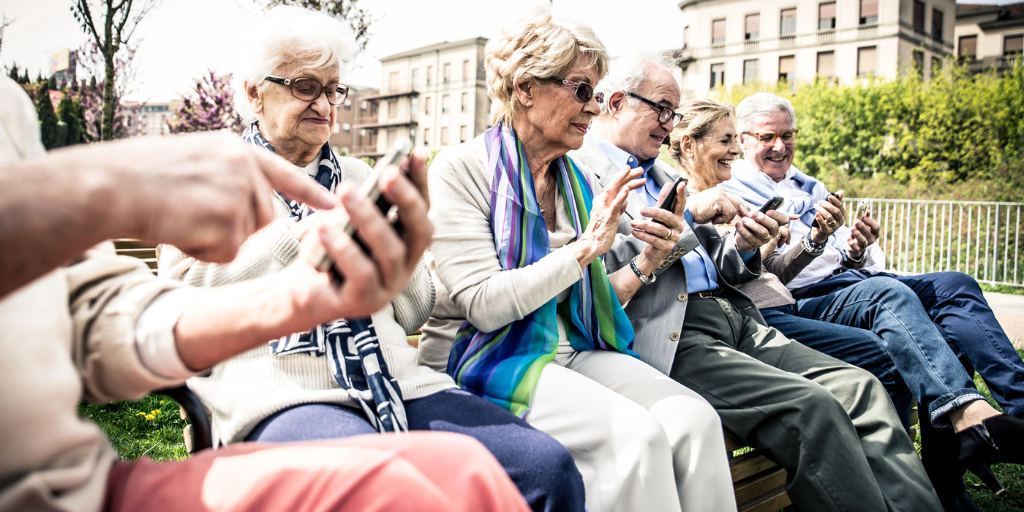
Seniors are the new screen addicts
They take their phones out during meals. They miss out on quality time with family. They stay up late scrolling, interfering with their sleep. They spend hours addicted to the glow of their smartphones.
I’m not talking about the kids: I’m talking about the grandparents.
Say hello to a new generation of screen addicts. The elderly are spending more and more time on screens. A recent survey from Britain found that residents over 65 spend over three hours per day on smartphones, tablets, and computers. That doesn’t sound too bad—three hours a day. But that’s in addition to five and a half hours a day they spend watching traditional television. That makes over eight hours a day of non-working time in front of a screen.
There are reasons to feel good, bad, and indifferent about this trend.
First, let’s take the good. The internet is great at connecting people, and the elderly are some of the biggest beneficiaries. Zoom and FaceTime calls let them stay in touch with relatives who live far away. Online book clubs, yoga classes, and church services bring their interests (and social interaction) to seniors at home, which is especially useful for seniors that have limited mobility.
Online shopping can be a lifesaver, especially for seniors who don’t drive. Music and streaming services let older people enjoy the movies, TV shows, and songs they remember from their youth—or from their home countries if they live far from their place of birth. Apps like Duolingo promote lifelong learning and exploration. Podcasts and audiobooks provide entertainment without the eyestrain of reading. Games help pass the time.
It can be uncomfortable to talk about, but many seniors suffer from loneliness and boredom. Screens—whether they’re televisions, computers, tablets, e-readers, or smartphones—these can make the long days of the twilight years more enjoyable. Some studies also suggest that seniors who use smartphones have lower rates of cognitive decline.
What’s more, many of the concerns about kids on screens just don’t apply to seniors. For example, parents worry that kids who spend too much time online won’t form meaningful in-person relationships, or that they won’t learn how the real world works. But seniors have already lived a long life; they have in-person friends and family members; they’ve had life experiences. The screen time is in addition to, not instead of, those things.
Another big worry about kids on phones is the time they waste. An hour a teenager spends scrolling through TikTok is an hour they’re not discovering their talents, getting exercise, learning about nature, or studying for the future. But retirees have a lot of free time. A few hours of scrolling social media carries a lower opportunity cost at this stage in life.
So is that the whole story? Not quite: there are also reasons to worry about seniors and smartphones. The first is that seniors tend to have accumulated savings during their lifetimes. And their money is often connected to their phones. In-app purchases in addictive games can add up quickly. More worryingly, seniors are easy targets for online fraud. Scammers target lonely seniors: they reach out to them on messaging apps like WhatsApp—and then use those same apps to deceive seniors and steal their money.
Seniors may also lack the daily structure that young and middle-aged people have. For example, kids may be glued to their phones at home. But parents nag them to put their phones down at dinnertime; their schools take their phones away during classroom time. Middle-aged people have to go to work, do the shopping, drive kids around, and maintain a household.
Seniors, though, don’t have as many built-in opportunities for in-person interactions. So it’s much easier for an older person to fall into a marathon smartphone session without any interruption. And there are fewer people around to steer them away from screens.
One thing is for sure, though: this generation of retirees is different. Older adults have long been laggards in adopting digital technology. Not anymore. Many people in their sixties today have worked with a connected computer for decades; they’ve had smartphones almost as long. Hardware makers have noticed that seniors are a great opportunity for them. Apple’s new AirPods can double as a hearing aid; many smart watches monitor health and falls, and can help in an emergency.
The old trope of a clueless retiree, unable to figure out how to plug in a computer: those days are gone.
Jeff’s take
I read some articles with stories about families of multiple generations under one roof. One person said, her kids know not to take out their phones at the table. But it’s the grandfather in the family who’s got the screen out during dinner.
One parent brings her small kids to visit their grandparents. Out of the two grandparents, one puts down the devices, but the other can’t stop. She worries her kids will miss out on time with their grandfather, because he’s looking at a screen during their visits.
Learn English the way it’s really spoken