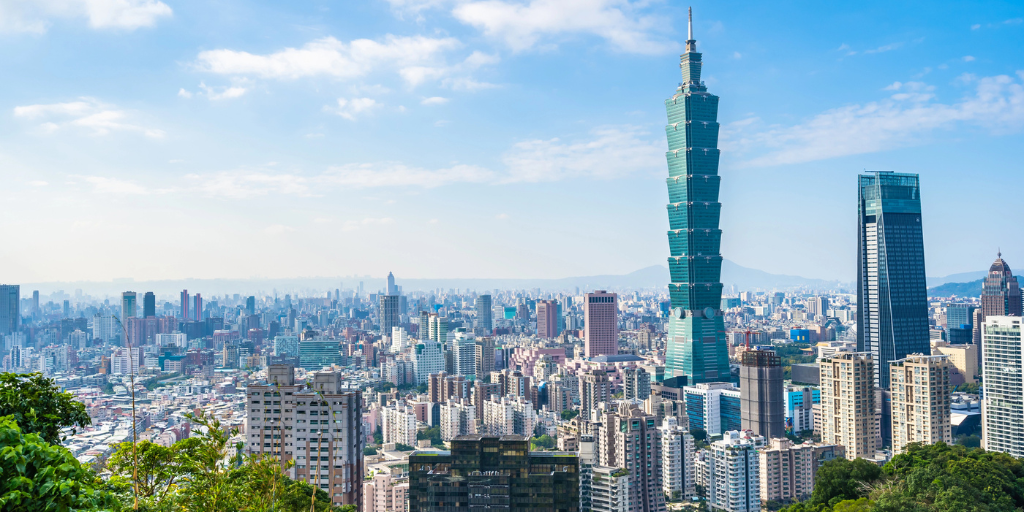
The ‘free solo’ climb of Taiwan’s tallest tower
It was an ordinary Sunday morning in Taipei, the capital of Taiwan—ordinary except for one thing. A crowd of thousands of people gathered in Taipei’s financial district to watch an American man climb the city’s tallest skyscraper, the Taipei 101.
At about 9:00 a.m. local time, forty-year-old Alex Honnold, wearing a red t-shirt, laced up his custom-made climbing shoes, strapped a small bag of chalk around his waist, waved to the crowd, and started climbing with his bare hands. Ninety-one minutes and 34 seconds later, he stood on the top of the building.
The crowd in Taipei got what it wanted: a history-making spectacle, a daredevil feat playing out before their own eyes. They also got to be part of history. For it wasn’t just the crowd on hand that saw Honnold’s climb. The whole thing was streamed live on Netflix, where millions of people watched it from every corner of the globe.
When you think of climbing, you probably think of rock climbers with elaborate ropes and harnesses for safety. But there’s a style of climbing called “free solo.” That’s when the climber has no safety gear—no ropes, no nets, no protection, no safety system of any kind.
Free solos are exceptionally dangerous, and few climbers attempt them. The most famous free solo climb belongs to Alex Honnold himself. In 2017, he climbed “El Capitan”—a 900-meter granite wall in Yosemite National Park in California—and he did it without any ropes. The documentary, “Free Solo” captured the whole thing. Other climbers watched in awe: no other climber has repeated it, and many climbers say nobody else could do it. Honnold did it all on camera.
Most climbing happens in nature, but some climbers set their sights on the urban jungle. Honnold has always had his eye on the Taipei 101. When the building opened in 2004, it was the world’s tallest, at 508 meters and 101 floors. It’s one of the most recognizable buildings in all Asia.
The design resembles a bamboo stalk, with eight stacked sections of floors. Each section extends slightly outward and includes a balcony. That makes this building so good for climbing. Other tall skyscrapers have smooth glass curtain walls, but the Taipei 101 has lots of beams and ledges for a climber to grab onto.
There’s just one small problem: skyscrapers have owners and cities have police forces. Climbers can’t stroll up to a building and start scaling the floors without permission from a building’s owner and, usually, a permit from the city. And building owners have good reason to say “no.” They could be held legally responsible if a climber falls.
But Honnold got lucky. In 2024, Janet Chia, a former Taiwanese TV host and model, was appointed the chairman of the company that manages the building. As an entertainer herself, she was open to ideas. Netflix pitched her on a live special: it would film Honnold climbing the exterior of the Taipei 101, and stream it live for all the world to see. Would she be interested?
It took a while, but both the building owners and the city gave their permission. The only thing left was to organize the climb.
It would be called “Skyscraper Live.” A team of four camera operators would be suspended by ropes to document the whole thing up close. Netflix agreed to pay Honnold a sum in the “mid-six figures”—something like half a million dollars—for his services (though he said he’d do it for free). Honnold was also given a back-off clause: if he got cold feet before or during the climb, he could always cancel or stop climbing without financial penalty. The building had windows and hatches that he could use if he got too tired and needed to abort the climb.
There was also the delicate question of what would happen if…the worst happened. Netflix said it would stream “Skyscraper Live” on a ten-second delay, so it could cut away if needed. On the day of the climb, the street below was cordoned off, but a crowd was allowed to watch.
The appointed day arrived, January 23, but the weather didn’t cooperate: rain made the metal and glass surfaces too slick. The next day was rainy, too, so the climb was delayed two days. But January 25 was clear, with blue skies and normal wind. Honnold put a single earbud in his left ear, so he could listen to the production crew (and music to keep him entertained). Just after nine in the morning, he started his climb up the southeast corner of the building.
Office workers watched from inside, making eye contact, holding up motivational banners, and taking selfies with Honnold in the background. His wife Sanni was inside: she waved to him through the glass as he went by. (She said afterward that she was having a panic attack the whole time.)
The climb wasn’t difficult, technically speaking. Honnold himself graded it easier than many other climbs he had done. The biggest challenge was managing fatigue. But he could stop and rest at the many balconies along the way. It was windy at the top, but he reached the spire at 10:43 a.m. He raised his arms and took a selfie. Taiwan’s president posted congratulations on social media.
Jeff’s take
I would be too afraid to watch on Netflix, never mind in person. I didn’t even know this was happening until it was over.
If you’re thinking, there must be something different about a person who can do that climb and not freak out…you’re right. Honnold has said that he had his brain scanned. The amygdala is the part of the brain that responds to fear. For most people, the amygdala lights up with activity when they see disturbing pictures. But his barely does.
Great stories make learning English fun